
Key Takeaways
- Clinical study: 62% of dogs with atopic dermatitis reached remission with PEA
- 58% showed significant reduction in itching within 8 weeks
- PEA reduces histamine and inflammatory chemicals that cause itching
- Safe for long-term use without the side effects of steroids
If your dog is constantly scratching, licking, or chewing at their skin, you know how frustrating it can be. Atopic dermatitis (allergic skin disease) affects around 10-15% of dogs, and finding relief without long-term steroid use is a challenge. Research shows that PEA (palmitoylethanolamide) can help.
A clinical study found that 62% of dogs with atopic dermatitis reached remission after PEA supplementation.
What Is Canine Atopic Dermatitis?
Atopic dermatitis is inflammation and irritation of the skin caused by allergies. It’s similar to eczema in humans. Your dog might be allergic to pollens, dust mites, mould, or contact allergens like certain plants.
Common signs include:
- Constant scratching or licking
- Red, inflamed skin
- Hot spots
- Hair loss from scratching
- Recurring ear infections
- Chewing at paws
The condition typically appears between ages 1-3 and is lifelong. Treatment usually involves identifying triggers (often impossible), antihistamines, and steroids.
The Problem with Long-Term Steroid Use
Steroids work fast and effectively for skin allergies. But long-term use causes problems: increased thirst and urination, weight gain, weakened immune system, and in some cases, diabetes or Cushing’s disease. Most vets prefer to minimise steroid use, but for dogs with chronic allergies, the alternatives are limited.
This is where PEA offers an option.
Clinical Study: PEA for Canine Atopic Dermatitis
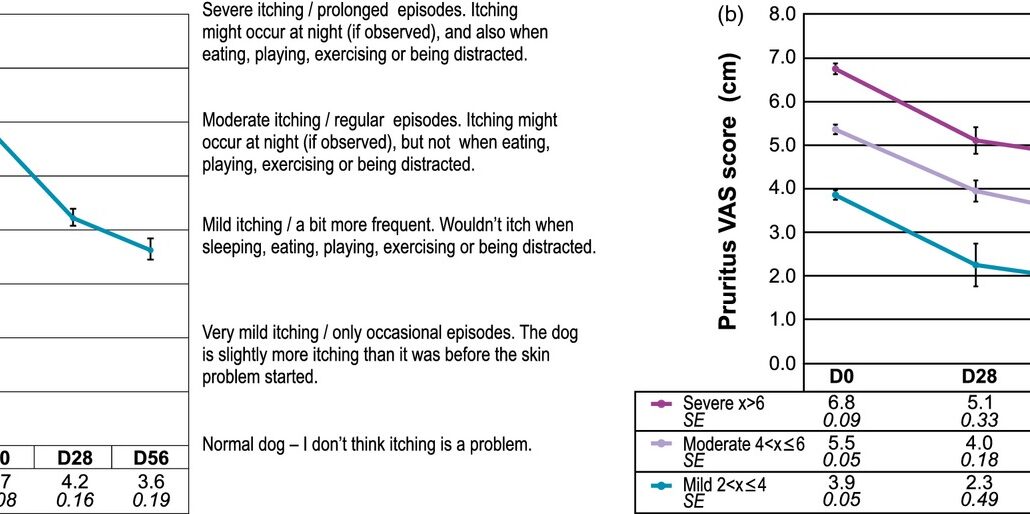
A multi-centre clinical study tested micronized PEA on dogs with moderate atopic dermatitis. The dogs received PEA supplementation for 56 days (8 weeks).
The Results
Itching (Pruritus):
- 58% of dogs showed a greater than 2cm reduction on the pruritus scale
- 30% reached “absent to very mild” itching levels
Skin Lesions:
- 62% of dogs reached remission (CADLI score ≤5)
Quality of Life:
- 45% of dogs reached quality of life scores described for healthy animals
Side Effects:
- Only 4 dogs reported any adverse events, all reversible
- Tolerability was rated “good to excellent”
The study concluded:
“PEA-m appears to be effective and safe in reducing pruritus and skin lesions, and in improving QoL in dogs with moderate atopic dermatitis and moderate pruritus.”
Source: Efficacy of ultra-micronized palmitoylethanolamide in canine atopic dermatitis
Supporting Research
A larger study tested PEA on 160 dogs with non-seasonal atopic dermatitis:
- At day 56, 58% showed greater than 2cm reduction in lesion size
- 62% achieved remission
- Quality of life scores significantly improved
How PEA Helps Itchy Dogs
PEA works differently from antihistamines or steroids.
Here’s what it does:
1. Reduces Mast Cell Activation Mast cells release histamine and other inflammatory chemicals when triggered by allergens. PEA directly reduces this release. Less histamine means less itching and redness.
2. Modulates the Inflammatory Response PEA doesn’t just block one pathway like most drugs. It works on multiple inflammatory mechanisms, which may explain why it helps where other treatments fail.
3. Supports the Skin Barrier Inflammation damages the skin barrier, making it more susceptible to allergens. By reducing inflammation, PEA helps the skin repair itself.
4. No Tolerance Build-Up Unlike some medications, dogs don’t develop tolerance to PEA. It remains effective with long-term use.
PEA vs Steroids for Dog Allergies
| Factor | Steroids | PEA |
|---|---|---|
| Speed | Fast (hours) | Gradual (2-4 weeks) |
| Side effects | Yes (significant with long-term use) | None documented |
| Long-term safety | Concerns | Safe |
| Effectiveness | High | Moderate to high (62% remission) |
| Prescription | Yes | No |
Many owners use PEA to reduce their dog’s steroid dose. PEA can be given alongside steroids, antihistamines, or other allergy medications with no interactions. For a detailed comparison, see PEA vs NSAIDs for Dogs.
How to Use PEA for Dog Skin Allergies
PEA comes as a tasteless, odourless powder. Sprinkle it on your dog’s food once or twice daily. Dosing:
- 10-20mg per kilogram of body weight per day
- For a 20kg dog: 200-400mg daily
- For a 30kg dog: 300-600mg daily
Timeline:
- PEA takes 2-4 weeks to build up in the body
- The clinical study showed significant improvements by week 8
- Continue daily for ongoing allergy management
What to Expect:
- Week 1-2: PEA building up, minimal visible change
- Week 3-4: Some dogs show improvement
- Week 6-8: Significant improvement in most responding dogs
Not every dog responds to PEA. The studies show about 60% reach full remission. But given the safety profile, it’s worth trying before committing to long-term steroid use.
For complete dosing information, see our guide to PEA for dogs.
Albert’s Story
Our own dog Albert had a severe allergic reaction to a garden plant called rhoeo. He scratched for weeks until we figured out the cause and removed the plant. That was before we knew about PEA. Now we keep Albert on daily PEA, partly for his ageing joints, but also knowing it helps regulate his inflammatory response. When he does encounter an allergen, the reaction is milder than it used to be. Read Albert’s full story
Summary
Canine atopic dermatitis is frustrating for dogs and owners alike. Clinical research shows that micronized PEA helps 62% of affected dogs reach full remission, with significant reductions in itching and improved quality of life. PEA is safe for long-term use, has no documented side effects, and can be used alongside other allergy treatments.
It takes 2-4 weeks to work, so it’s not a quick fix, but for chronic allergies it offers a steroid-sparing option worth trying.
Try PEA for Your Itchy Dog
Micronized PEA powder. Safe for long-term use. No prescription needed.
References
1. Noli C, et al. (2015). Efficacy of ultra-micronized palmitoylethanolamide in canine atopic dermatitis: an open-label multi-centre study. Wiley Online Library
2. Cerrato S, et al. (2010). Effects of palmitoylethanolamide on immunologically induced histamine, PGD2 and TNFalpha release from canine skin mast cells. PubMed
Related posts:
 Efficacy of ultra-micronized palmitoylethanolamide in canine atopic dermatitis: an open-label multi-centre study
 Palmitoylethanolamide (PEA) for Non-Flea Hypersensitivity Dermatitis in Cats
 PEA (Palmitoylethanolamide) Shown To Reduce Allergic Inflammatory Response Beagle Dogs
 Mast Cell Tumours in Dogs – Possible Relief?
