
Key Takeaways
- 4 show jumpers with non-responsive lameness all returned to competition after PEA
- Conditions included navicular syndrome, joint arthritis, and arthrosis
- PEA supplementation lasted 4 months before full remission
- No disease recurrence after returning to competition
- First published study on PEA use in horses
Horse lameness is one of the most common and frustrating problems in equine medicine. When conventional treatments fail, options become limited.
A case study published in 2020 offers promising evidence that PEA (palmitoylethanolamide) may help horses with non-responsive lameness return to work.
The Case Study: 4 Show Jumpers with Non-Responsive Lameness
This study, published in 2020, is the first to document PEA use in horses. It followed four show jumping horses that had been withdrawn from competition due to lameness that wasn’t responding to conventional treatment.
The Horses and Their Conditions
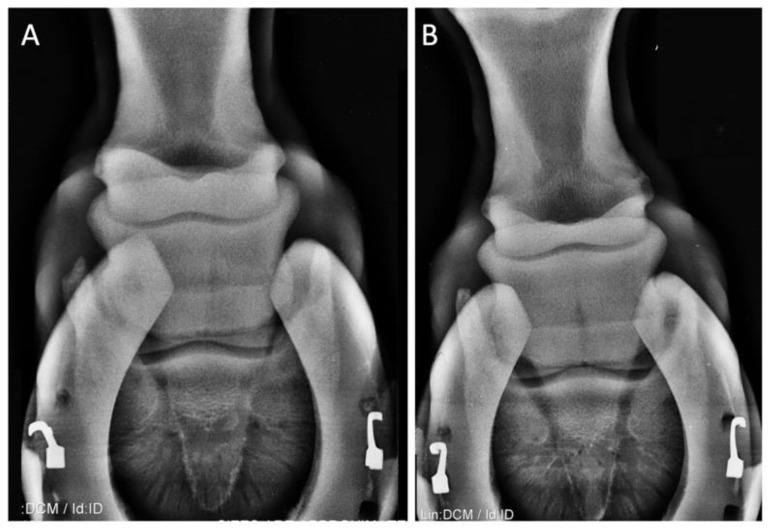
Horse 1: Navicular syndrome
- Chronic heel pain affecting the navicular bone and surrounding structures
- Common cause of front limb lameness in performance horses
Horse 2: Complicated chronic navicular syndrome with arthrosis
- Navicular syndrome plus degenerative joint disease
- Arthrosis of the distal interphalangeal joint (coffin joint) in the right front leg
Horses 3 & 4: Distal intertarsal joint arthritis
- Arthritis in the lower hock joints
- Common source of hind limb lameness in jumping horses
All four horses had undergone standard veterinary evaluation including radiographs, flexion tests, and diagnostic nerve blocks. Their lameness was classified using the American Association of Equine Practitioners (AAEP) scale. Despite treatment, none had improved enough to return to competition.
The PEA Protocol
Each horse received daily micronized PEA (PEA-um) added to their normal feed. The supplementation continued for four months.
The Results
After four months of PEA supplementation:
- All four horses showed remission of lameness
- All four returned to show jumping competition
- No disease recurrence was reported
The study concluded:
“After four months of PEA-um supplementation, all horses showed remissions of lameness that led to their reintroduction into showjumping competitions without disease recurrence.”
Source: Ultramicronized Palmitoylethanolamide in horses
Why This Study Matters
This is a small study – only four horses – so it’s not definitive proof. But it’s significant for several reasons:
1. Non-responsive cases
These weren’t horses with mild lameness. These were horses that had failed to respond to conventional treatment and had been withdrawn from competition. The fact that all four improved is notable.
2. Different conditions
The study included navicular syndrome (front limb) and hock arthritis (hind limb). PEA helped across different joint problems and locations.
3. Return to high-level work
These horses didn’t just become pasture-sound. They returned to show jumping, which demands significant athletic performance. This suggests meaningful functional improvement, not just reduced pain at rest.
4. No recurrence
The horses maintained their improvement after returning to competition, suggesting sustained benefit.
How PEA Works for Horse Lameness
PEA is a fatty acid naturally produced in horses (and all mammals). It plays a role in regulating inflammation and pain. When horses have chronic conditions, their natural PEA levels may become depleted.
What PEA does:
- Reduces inflammation in joints and surrounding tissues
- Modulates pain signalling
- Supports the body’s own anti-inflammatory systems
- Works through multiple pathways (not just one like most drugs)
What PEA doesn’t do:
- It’s not a fast-acting painkiller
- It won’t help acute injuries or fresh lameness
- It doesn’t mask pain (so it won’t push a horse past safe limits)
- It doesn’t replace proper veterinary diagnosis and treatment
Conditions Where PEA May Help Horses
Based on the case study and the general research on PEA’s anti-inflammatory effects, PEA may benefit horses with:
Joint Conditions:
- Navicular syndrome
- Hock arthritis (bone spavin, distal tarsal joint disease)
- Coffin joint arthritis
- Fetlock arthritis
- Ringbone
- General osteoarthritis
Other Chronic Conditions:
- Back pain and soreness
- Chronic soft tissue inflammation
- Age-related stiffness
- Post-injury management (after acute phase)
Where PEA is unlikely to help:
- Acute injuries (needs immediate veterinary care)
- Mechanical lameness (needs corrective trimming/shoeing)
- Fractures or major structural damage
- Infections
PEA vs Bute and Other NSAIDs
Bute (phenylbutazone) is the most common anti-inflammatory for horses. It works well for acute pain but has significant risks with long-term use:
- Gastric ulcers (very common in horses on long-term bute)
- Kidney damage
- Right dorsal colitis (serious gut condition)
- Protein binding issues
- Not legal for use in competition horses in many jurisdictions
| Factor | Bute/NSAIDs | PEA |
|---|---|---|
| Speed | Fast (hours) | Gradual (weeks to months) |
| Gut safety | High ulcer risk | No GI risk |
| Kidney safety | Risk with long-term use | No kidney risk |
| Competition use | Often prohibited | Not FEI prohibited |
| Long-term safety | Concerns | Safe |
| Acute pain | Excellent | Limited |
| Chronic conditions | Good (with risks) | Good |
For a detailed comparison, see PEA vs Bute for Horses.
The practical approach: Many horse owners use PEA as a daily supplement for chronic conditions, reserving bute for acute flare-ups or specific events. This reduces total NSAID exposure while maintaining comfort.
How to Use PEA for Horses
PEA comes as a tasteless powder that can be added directly to feed.
Dosing:
- 10-20mg per kilogram of body weight per day
- For a 500kg horse: 5-10 grams daily
- Can be given in one dose or split between meals
Timeline:
- The case study horses were supplemented for 4 months
- Some improvement may be visible earlier
- For chronic conditions, ongoing supplementation is recommended
Practical Tips:
- PEA is tasteless and most horses accept it readily
- Mix into damp feed or add a small amount of molasses if needed
- Consistency is key – daily dosing produces better results
- Continue during competition periods (PEA is not FEI prohibited)
For complete dosing information, see our guide to PEA for horses.
What to Expect
Realistic timeline:
- Week 1-4: PEA building up in the system
- Month 1-2: Initial improvements may become visible
- Month 3-4: Full effects typically seen (as in the case study)
- Ongoing: Continued supplementation maintains benefits
Signs of improvement:
- Reduced stiffness when starting work
- Improved willingness to move forward
- Better tracking and movement quality
- Reduced heat or swelling in affected joints
- Better overall attitude and comfort
Important notes:
- PEA works best for chronic conditions, not acute injuries
- It supports healing and comfort but won’t cure underlying disease
- Continue proper veterinary care, farrier work, and management
- PEA is a supplement, not a replacement for appropriate treatment
Summary
A case study of four show jumping horses with non-responsive lameness found that all four returned to competition after four months of PEA supplementation. The conditions included navicular syndrome and joint arthritis.
While this is a small study, it’s the first published research on PEA in horses and the results are encouraging. PEA offers a safe, long-term option for managing chronic lameness without the gut and kidney risks of NSAIDs.
For horses with chronic joint problems or lameness that isn’t fully responding to conventional treatment, PEA is worth considering.
Try PEA for Your Horse
Micronized PEA powder. Not FEI prohibited. Fast Delivery from Australia.
References
1. Gugliandolo E, et al. (2020). Ultramicronized Palmitoylethanolamide in Horses: A Case Study. PubMed
2. Petrosino S, Di Marzo V. (2017). The pharmacology of palmitoylethanolamide and first data on the therapeutic efficacy of some of its new formulations. PubMed
Related posts:
 Complicated Study Shows That PEA Has Massive Positive Effect On Gut Biota – Helping Reduce Inflammation Including Improving Gut Barrier Integrity! Especially If Obese.
 Efficacy of ultra-micronized palmitoylethanolamide in canine atopic dermatitis: an open-label multi-centre study
 PEA for Chronic Pain in Dogs and Cats
 PEA (Palmitoylethanolamide) Shown To Reduce Allergic Inflammatory Response Beagle Dogs
